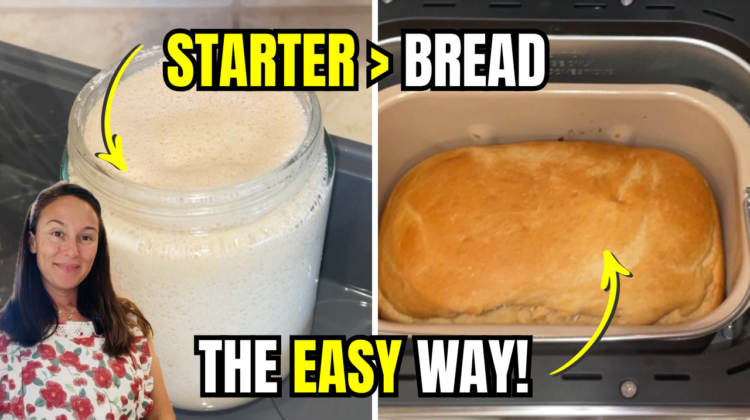
Ready to make sourdough bread in your bread machine? In this post I share a video tutorial and recipe for how to make sourdough bread machine bread.
If you love sourdough but want to keep the process simple, you can make a delicious loaf in your bread machine without using commercial yeast.
This recipe uses your active sourdough starter as the only leavening. The bread machine does the kneading for you, and you simply let the dough rise until it’s ready to bake.
The biggest difference from regular bread-machine recipes is that you can’t rely on the machine’s preset timing for the rise. Sourdough is naturally slower and can take several hours to rise depending on the temperature of your kitchen and how active your starter is.
What Is 100% Hydration Sourdough Starter?
A 100% hydration starter is one that contains equal weights of flour and water.
For example:
- 50g sourdough starter
- 50g water
- 50g flour
If you’re feeding your starter equal parts starter, water, and flour by weight, you’re maintaining a 100% hydration starter.
For this recipe, use your starter when it is active, bubbly, and has risen after feeding.
I used My Rustic Roots Sourdough Starter to make my starter for this bread machine sourdough bread.
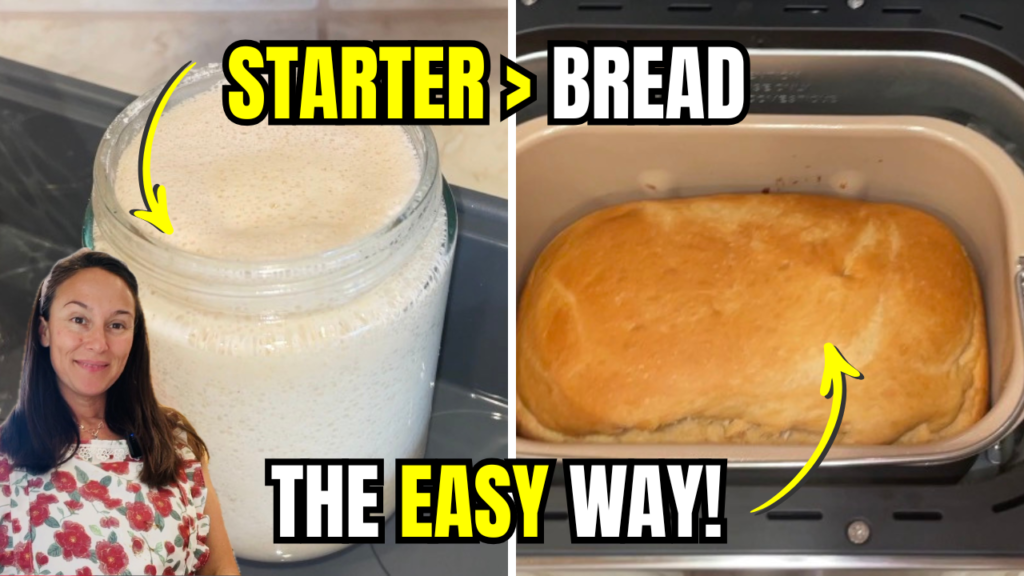
Here’s how I made the starter, from start to finish. The bread I made in this video is the recipe from my Neretva Bread Maker manual. In this blog post I’m sharing a different bread recipe, one without yeast added.
Check price of My Rustic Roots Sourdough Starter >
Watch this video:
Why No Commercial Yeast?
Many people want sourdough bread specifically because they want the sourdough starter to naturally ferment and raise the bread.
There’s no need to add commercial yeast to this recipe. The sourdough starter provides the leavening while also giving the bread its characteristic sourdough flavor.
The tradeoff is that sourdough doesn’t follow the predictable timeline of commercial yeast. Your dough may need several hours to rise.
About the Neretva Bread Maker
I made this sourdough recipe with the Neretva 3.3-lb Bread Maker in mind. The Neretva is a large-capacity bread machine with a horizontal pan and two kneading paddles, making it especially useful for larger loaves and homemade dough. The machine also has a dedicated Dough program, which is what we use for this sourdough recipe. (Neretva)
For sourdough, I recommend using the Neretva’s Dough cycle to mix and knead the dough, then removing the paddles and allowing the dough to rise naturally before using the machine’s Bake function. This gives you more control over the fermentation time, which is important because sourdough doesn’t rise on the same predictable schedule as bread made with commercial yeast.
The Neretva’s large pan is also useful if you like making substantial homemade loaves, although this recipe doesn’t need to fill the machine to its maximum 3.3-lb capacity.
Why I like the Neretva for this recipe: it does the labor-intensive kneading for you, while you still get control over the most important part of sourdough baking—the rise.
Learn more about the Neretva Bread Maker >
Easy Sourdough Bread Machine Recipe
Makes 1,000 gram loaf (about 2.2lb)
Ingredients
- 295g active 100% hydration sourdough starter — about 1¼ cups
- 220g water — about ¾ cup + 2 teaspoons
- 440g bread flour — about 3½ cups
- 17g olive oil — about 1 tablespoon + 1 teaspoon
- 11g salt — about 1¾ teaspoons
- 12g sugar or maple syrup — about 1 tablespoon, optional
Instructions
- Add the ingredients.
Add the sourdough starter, water, olive oil, flour, salt, and optional sugar or maple syrup to the bread machine pan. - Run the Dough cycle.
Let the bread machine knead the dough. - Remove the paddles.
Once kneading is finished, remove the dough from the pan, take out the paddles, and return the dough to the pan. - Shape the dough.
Gently shape the dough into a loaf and place it back in the pan. - Let it rise.
Close the lid and let the dough rise until it has noticeably increased in size and is getting close to the top of the pan. This may take several hours. - Bake.
Once the dough has risen sufficiently, select the Bake cycle and bake until the loaf is fully cooked. - Cool completely.
Remove the bread from the pan and let it cool completely before slicing.
The Most Important Part: Watch the Dough
When making sourdough in a bread machine, don’t worry about following an exact rising time.
Your starter may be very active and raise the dough quickly, while another starter may take much longer. Room temperature also makes a big difference.
Instead of asking, “Has it been three hours?”, look at the dough.
You want it to have risen significantly and look puffy and airy before baking.
If you bake it too early, the loaf can turn out dense.
Do You Add Salt Later?
You may have seen traditional sourdough recipes where the salt is added after the flour and water have had time to rest. That’s part of a technique called autolyse.
For this easy bread-machine version, there’s no need to complicate things. Add the salt with the other ingredients.
The goal of this recipe is simple, reliable sourdough bread with as little hands-on work as possible.
Can You Use All-Purpose Flour?
Yes. Bread flour will generally give you a little more structure and chew, but all-purpose flour can also work.
If you’re new to making sourdough in a bread machine, I’d start with bread flour so you have the best chance of getting a nicely structured loaf.
Final Tips
- Use an active, bubbly starter, not one that has been sitting dormant in the refrigerator.
- Don’t rush the rise.
- Remove the paddles after kneading so you don’t have large holes in the bottom of your loaf.
- Watch the dough rather than the clock.
- Let the finished bread cool completely before slicing.
Easy No-Yeast Sourdough Bread Machine Bread
Prep: About 10 minutes
Kneading: Bread machine Dough cycle
Rise: Several hours, depending on your starter and room temperature
Bake: Bread machine Bake cycle
Yield: 1 loaf
This is a simple way to get real sourdough flavor from a bread machine without adding commercial yeast—perfect for anyone who wants the convenience of a bread machine without giving up naturally fermented sourdough bread.