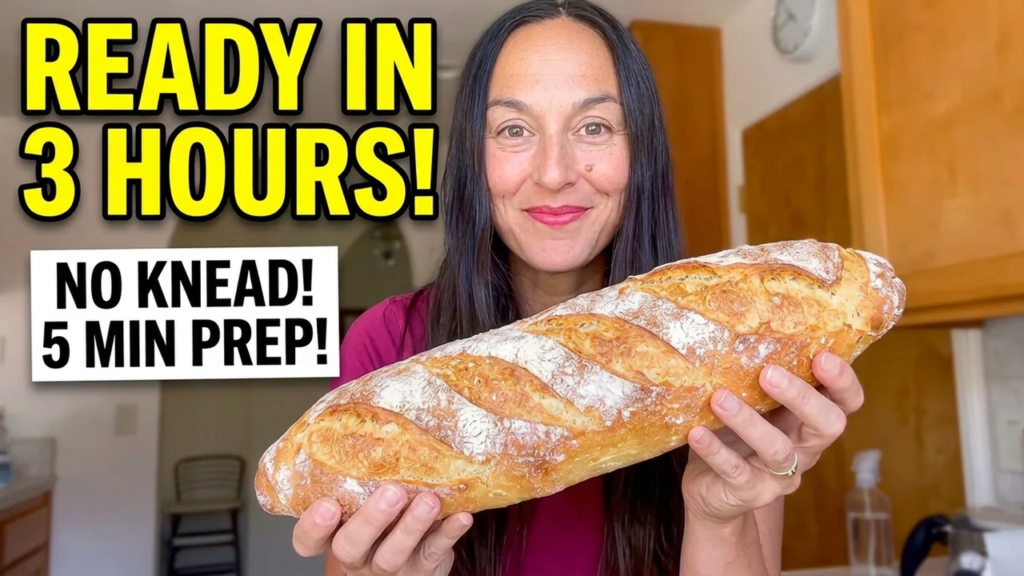
Want fresh, homemade French baguettes without spending hours kneading dough? This easy no-knead baguette recipe is one of the simplest ways to make crusty, artisan-style bread at home. With just 4 basic ingredients, about 5 minutes of hands-on prep, and no kneading whatsoever, you can have fresh baguettes ready in about 3 hours.
The secret is letting the dough rest. Instead of spending time kneading by hand, simply mix the ingredients together, let the dough rise, shape your baguettes, and bake them in a hot oven with steam to help develop a delicious crust.
This recipe makes 6 small baguettes or 3 large baguettes, making it perfect for family dinners, sandwiches, meal prep, or stocking your freezer with homemade bread.
As a former professional chef, I love recipes that make good food easier to prepare at home. This is one of my favorite ways to keep fresh bread on hand without turning bread-making into an all-day project.
Watch this video tutorial:
Why You’ll Love This Easy No-Knead Baguette Recipe
- Only 5 minutes of hands-on prep: Mix the dough and let time do the work.
- No kneading required: No hand kneading, stretching, or complicated techniques.
- Just 4 ingredients: Flour, water, yeast, and salt are all you need.
- Ready in about 3 hours: Enjoy fresh homemade bread without an overnight rise.
- Makes multiple baguettes: Bake enough for dinner and freeze the extras.
- Perfect for beginners: You don’t need professional bread-making skills to get started.
You can mix the dough in a stand mixer with a dough hook or simply use a bowl and spatula. Either way, the goal is the same: combine the ingredients until no dry flour remains, then let the dough rise.
Ingredients for No-Knead Baguettes
You only need four simple ingredients to make these homemade baguettes.
Warm water: Use 530 grams of water at approximately 100°F. The water helps hydrate the flour and activate the yeast.
Active dry yeast: One tablespoon of active dry yeast helps the dough rise during the two-hour resting period.
Salt: Just 1 1/4 teaspoons adds flavor to the bread.
Bread flour: You’ll need 910 grams of bread flour to make the dough for 3 large or 6 small baguettes.
Using a kitchen scale makes measuring the flour and water much more accurate. Bread dough can be sensitive to differences in flour measurements, so weighing your ingredients helps produce consistent results.
Shop the Products I Used in This Video
Buy the items I used in this video using my affiliate links at no additional cost to you. Thank you for supporting my channel!
Stand Mixer
I like the Neretva Super Stable Stand Mixer. It’s a budget-friendly stand mixer that works great and looks great on the countertop! I highly recommend this:
Bread Machine
You can also make this dough in a bread machine which will hold the dough at the correct temperature while rising. I like the Neretva 3.3LB bread machine for this because it’s large enough to make this amount of dough, unlike most smaller machines.
Bread Flour
I use the Organic Poselli Bread Flour because it’s nonirradiated and nonbromated. It tastes great and is higher in protein than all-purpose flour.
Cutting Board
I use John Boos cutting boards because they are restaurant quality and provide a great surface for working with dough.
Salt
I use Redmond’s Real Salt in all my recipes. It’s an ancient salt mine in Utah and doesn’t contain microplastics like most other sea salts.
Yeast
I use Bob’s Red Mill Dry Active Yeast because it has minimal ingredients as opposed to other brands.
Digital Scale
I use a digital scale to get precise measurements quickly and easily. It’s much easier than measuring large amounts of water and flour.
Baguette Pan
I use a baguette pan to bake these to get that perfect baguette shape.
Looking for more of my favorite kitchen products?
Visit my Amazon Storefront to browse more products I use and recommend!
How to Make the Easiest No-Knead Baguettes
This simple baguette recipe has just a few steps. Most of the time is spent letting the dough rise rather than actively working with it.
Step 1: Mix the water and yeast
Add 530 grams of warm water at approximately 100°F to a large mixing bowl. Add 1 tablespoon of active dry yeast.
Whisk for 15–30 seconds, until the yeast is dispersed and there are no obvious lumps.
Step 2: Add the salt and bread flour
Add 1 1/4 teaspoons of salt followed by 910 grams of bread flour.
Mix with a stand mixer fitted with a dough hook or use a spatula if mixing by hand. Continue until all the flour is incorporated and there are no dry patches remaining.
There’s no kneading required! The dough should be thoroughly mixed, but you don’t need to develop it by working it for several minutes.
Step 3: Let the dough rise for 2 hours
Cover the bowl and leave the dough in a warm room, ideally around 70–80°F, for approximately 2 hours.
The dough should rise noticeably and may begin to collapse slightly as fermentation progresses. This is a useful visual cue that the dough has developed and is ready to shape.
Step 4: Shape the baguettes
Generously flour a cutting board or clean work surface and transfer the dough onto it.
Cut the dough into 3 equal portions for large baguettes or 6 portions for smaller baguettes.
Flatten each piece gently, then fold or roll it into a long baguette shape, pinching the ends together to seal the dough.
Transfer the shaped baguettes to a baguette baking pan.
Step 5: Let the baguettes rest for 20 minutes
Allow the shaped dough to rest for approximately 20 minutes.
During this time, preheat your oven to 450°F.
For steam, place a suitable metal tray or oven-safe dish containing water inside the oven. Make sure the dish is safe for high-temperature use and follow your oven manufacturer’s guidance for introducing steam.
Steam during the early part of baking helps keep the crust flexible while the baguettes expand.
Step 6: Score and prepare the baguettes
Brush the tops lightly with water, then use a sharp bread lame or knife to make 3–5 diagonal slashes along the top of each baguette.
Scoring gives the dough controlled places to expand as it bakes and helps create the familiar baguette appearance.
Step 7: Bake for 20–25 minutes
Place the baguettes in the preheated 450°F oven and bake for approximately 20–25 minutes.
Look for a golden-brown crust and a fully baked interior. Baking time may vary depending on the size of your baguettes and your oven.
Use caution when working around hot water and steam, and avoid pouring water directly onto a hot oven floor or glass door.
Step 8: Cool completely before slicing
Remove the baguettes from the oven and transfer them to a cooling rack.
This step is important! Let the baguettes cool completely before slicing.
Although the bread may look finished when it comes out of the oven, the interior continues to set as it cools. Cutting into the loaves too early can leave the crumb gummy or sticky.
Once cooled, slice and enjoy your homemade baguettes.
Tips for the Best Homemade Baguettes
Weigh your ingredients. Using a kitchen scale helps you get the correct flour-to-water ratio and makes the recipe easier to repeat.
Don’t add too much extra flour. The dough can be sticky, which is normal for this type of no-knead bread. Flour your work surface generously enough to handle the dough without incorporating excessive amounts into it.
Watch the dough, not just the clock. Room temperature affects how quickly bread dough rises. Your dough should rise noticeably and begin to soften or collapse slightly before shaping.
Use steam for a better crust. Steam helps delay crust formation during the initial bake, allowing the baguettes to expand. Always use an oven-safe container and handle steam carefully.
Allow enough cooling time. This is one of the easiest ways to improve the texture of homemade bread. Slicing too soon can make the interior seem underbaked even when the loaf has finished baking.
How to Store Homemade Baguettes
Fresh baguettes are best enjoyed the day they’re baked, when the crust and interior have their ideal texture.
At room temperature: Once completely cooled, store the baguettes in a paper bag or bread bag for short-term storage. The crust will gradually soften over time.
In the freezer: These baguettes freeze well, making them a convenient option for meal prep. Allow the loaves to cool completely, then place them in freezer-safe bags and freeze.
To reheat: Thaw as needed and warm the baguettes in an oven until heated through and the crust has crisped up again. You can lightly moisten the crust with water before reheating if desired.
Freezing individual baguettes makes it easy to take out only what you need for dinner.
What to Serve With French Baguettes
Homemade baguettes are incredibly versatile. Serve them with:
- Soup, stew, or chili.
- Pasta dishes and salads.
- Olive oil and your favorite seasonings.
- Garlic butter for homemade garlic bread.
- Sandwich fillings for a quick lunch.
- Cheese, spreads, or other appetizers.
You can also slice leftover baguettes and toast them to make croutons or bruschetta.
Frequently Asked Questions
Can you make baguettes without kneading?
Yes! This recipe requires no kneading at all. Simply mix the ingredients until the flour is incorporated, let the dough rise, shape the baguettes, and bake.
How long does this no-knead baguette recipe take?
The recipe takes approximately 3 hours from start to finish, including rising, shaping, and baking time. Active preparation takes about 5 minutes, although shaping and scoring require a little additional hands-on time.
Can I make baguette dough without a stand mixer?
Absolutely. Use a large bowl and a sturdy spatula to mix the ingredients until there are no dry patches of flour. A stand mixer is convenient, but it isn’t necessary for this recipe.
Can I make 6 small baguettes instead of 3 large ones?
Yes. Divide the dough into 6 portions for smaller baguettes or 3 portions for larger loaves. Smaller baguettes may bake more quickly, so check them toward the beginning of the baking window.
Why do my baguettes turn gummy inside?
One common reason is slicing the bread before it has cooled completely. The interior continues to set after baking, so allow the loaves to cool fully before cutting.
If the interior is still gummy after cooling, check that the baguettes are baked through and that your oven temperature is accurate.
Can I freeze homemade baguettes?
Yes! Once completely cooled, place the baguettes in freezer-safe bags and freeze. Reheat them in the oven to refresh the crust when you’re ready to serve them.
Do I need a special baguette pan?
A baguette pan is helpful because it supports the long shape of the dough as it bakes. If you don’t have one, you can use a suitable baking sheet and shape the baguettes with enough space between them. Their shape and spread may be a little different.
Try This Easy No-Knead Baguette Recipe
If you’ve wanted to make homemade French bread but thought it would take too much time or effort, give this simple method a try.
With just four ingredients, no kneading, and about 5 minutes of initial preparation, you can make several baguettes to serve fresh or freeze for later.
I’d love to know how yours turn out! Do you prefer a soft baguette or one with an extra-crispy crust? Leave a comment below and share how you serve your homemade bread.
Subscribe for more practical kitchen tips, easy recipes, and ways to make cooking for your family simpler.
Pin this recipe on Pinterest: