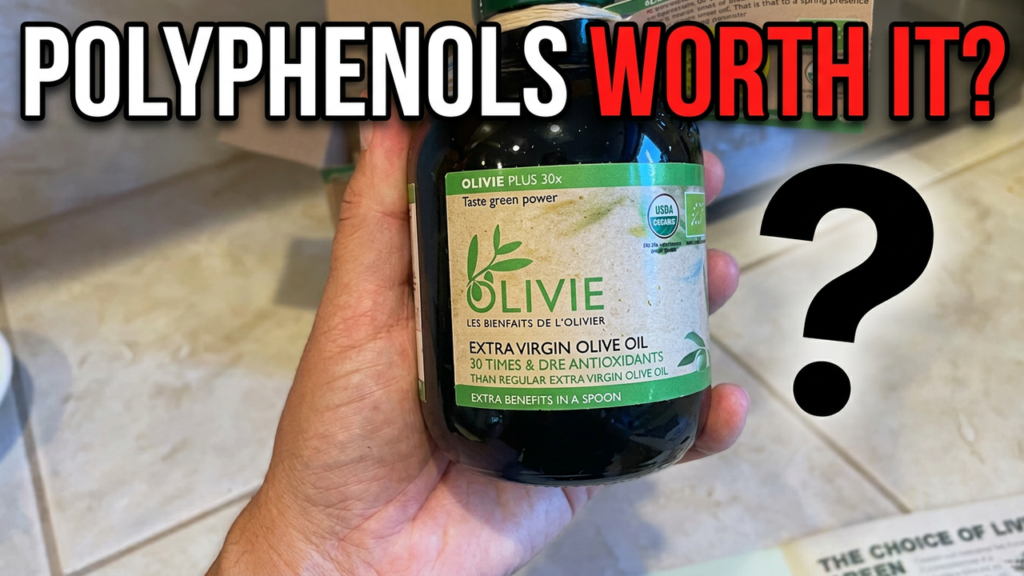
If you’ve started seeing high-polyphenol olive oil everywhere, you may be wondering what makes it different from the extra virgin olive oil you’ve been buying for years.
Is more polyphenols actually better? How do you know if an olive oil is genuinely high in polyphenols? And is it worth paying more for a bottle marketed specifically for its polyphenol content?
As a chef, I think there is a better way to look at it: don’t buy an olive oil just because the bottle makes big health claims. Understand what you’re paying for, how the oil tastes, and how you will actually use it.
I’ve been looking at high-polyphenol olive oils from that perspective, including OLIVIE Plus 30X from Atlas Olive Oils and the regular ATLAS Organic Extra Virgin Olive Oil.
The two serve very different purposes, and understanding that difference can help you decide whether a high-polyphenol olive oil belongs in your kitchen.
What Is High-Polyphenol Olive Oil?
Polyphenols are naturally occurring plant compounds found in olives and olive oil. They are part of what gives some extra virgin olive oils their characteristic bitterness, pepperiness and pungency.
Not all extra virgin olive oils contain the same amount.
Polyphenol levels can vary based on factors such as:
- Olive variety
- When the olives are harvested
- Growing conditions
- Processing and extraction
- Storage
- Age of the oil
That means simply buying a bottle labeled “extra virgin olive oil” doesn’t tell you how much polyphenol content it contains.
There also isn’t one universal U.S. regulatory number that officially defines an olive oil as “high-polyphenol.” When you’re comparing products, it’s therefore useful to look beyond the marketing language and find out whether the producer provides actual information about the oil’s polyphenol content and testing.
Why Are People Interested in Olive Oil Polyphenols?
Olive oil polyphenols have been studied for their antioxidant and other biological effects, which is one reason high-polyphenol olive oil has become such a popular category.
But this is also where I think shoppers need to be careful.
You will find olive oil websites making very broad claims about weight loss, inflammation, heart health, aging and disease prevention. The research surrounding olive oil polyphenols is interesting, but that doesn’t mean every health claim you see on a bottle or website has been established.
For example, the European Union has authorized a specific health claim concerning olive oil polyphenols and protection of blood lipids from oxidative stress, under defined conditions. That is much narrower than saying that high-polyphenol olive oil will prevent or treat a particular disease.
So I would think of polyphenols as one characteristic to consider when choosing an olive oil, rather than treating high-polyphenol olive oil like a medication or supplement.
How Do You Know If an Olive Oil Is High in Polyphenols?
This is one of the most important questions to ask before paying a premium.
Look for information about:
1. The actual polyphenol content
A specific laboratory measurement is much more useful than phrases such as “antioxidant rich” or “packed with polyphenols.”
Polyphenol results are often expressed in mg/kg, but testing methods can differ, so don’t assume two numbers are automatically comparable unless you know how they were measured.
2. The harvest date
Olive oil isn’t wine. Older isn’t necessarily better.
Polyphenol content and other quality characteristics can change during storage, particularly when oil is exposed to heat, light and oxygen.
That’s why I like to know when the olives were harvested rather than relying only on a distant “best before” date.
3. The olive variety
Different olive varieties naturally produce oils with different chemical and sensory characteristics.
A named variety can tell you more about what you’re buying, but variety alone doesn’t prove that a particular bottle has a high polyphenol concentration.
4. How the oil is packaged
Light, heat and oxygen are enemies of olive oil quality.
Dark glass, tins and other protective packaging can help protect the oil from light. Once you bring it home, keep the bottle tightly closed and store it somewhere cool and dark.
5. How transparent the producer is
If a company is charging a premium specifically because an oil is high in polyphenols, I want to see enough information to understand what makes it different.
The more specific the information, the easier it is for you to make an informed comparison.
Does High-Polyphenol Olive Oil Taste Different?
Yes, it can.
One of the things I actually like about high-polyphenol olive oil is that you can often taste the difference.
A more phenolic olive oil may have noticeable:
- Bitterness
- Pepperiness
- Pungency
- Green, grassy flavors
- A warming sensation in the throat
If you’re accustomed to a very mild olive oil, a high-polyphenol oil can be surprisingly intense.
And that’s not necessarily a bad thing.
As a chef, I actually think this is where the distinction between an everyday olive oil and a specialty finishing oil becomes useful.
You don’t necessarily need your most intense olive oil for everything you cook.
Should You Cook With High-Polyphenol Olive Oil?
You can use extra virgin olive oil in cooking, but I don’t think every expensive bottle needs to become your everyday cooking oil.
Think about how you use olive oil.
If you’re sautéing vegetables, making a large batch of pasta, roasting vegetables or making a marinade, you may want a good everyday EVOO that you don’t have to ration.
If you’re finishing a dish, dressing a salad, dipping bread or drizzling oil over beans, vegetables or soup, a more intensely flavored premium oil can make more sense.
That’s how I would approach the price difference.
You don’t necessarily have to choose one olive oil.
You can have an everyday EVOO for cooking and a more concentrated, flavorful olive oil that you use where you can really taste it.
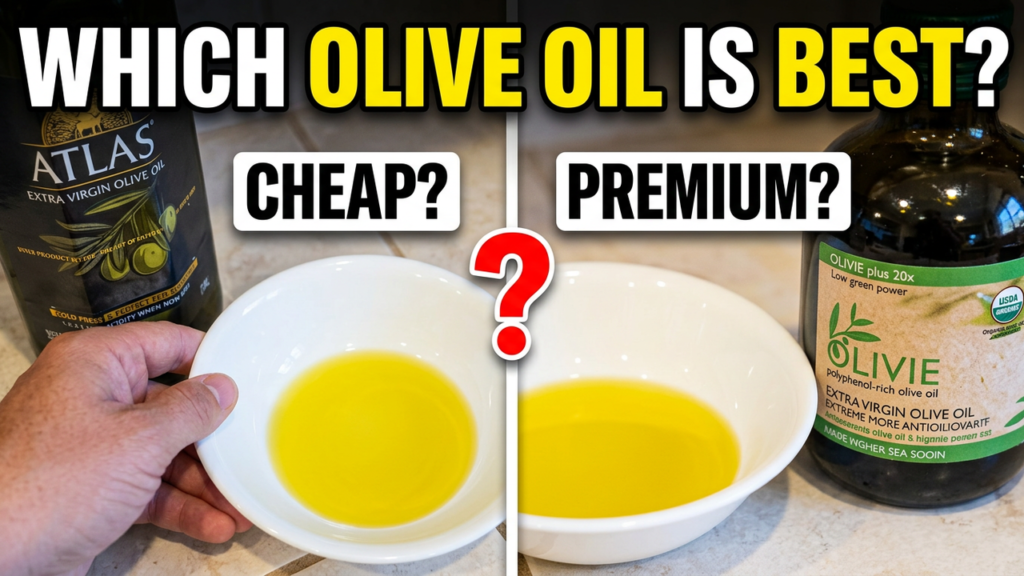
OLIVIE Plus 30X vs. ATLAS Organic Extra Virgin Olive Oil
This is where I think the difference becomes particularly interesting.
Atlas Olive Oils sells both its regular ATLAS Organic Extra Virgin Olive Oil and OLIVIE Plus 30X.
The regular ATLAS Organic Extra Virgin Olive Oil is positioned as an everyday Moroccan EVOO. Atlas describes it as organic, cold-pressed and suitable for general cooking, baking and desserts.
OLIVIE Plus 30X is a different proposition.
Atlas markets OLIVIE Plus 30X as an organic extra virgin olive oil with a dramatically higher concentration of polyphenols, particularly hydroxytyrosol, than regular extra virgin olive oil.
That doesn’t mean one is simply “better.”
It means you’re buying them for different reasons.
ATLAS Organic Extra Virgin Olive Oil
I’d think of the regular ATLAS EVOO as the everyday kitchen oil.
It’s the type of olive oil that makes sense when you want a flavorful organic EVOO for cooking and you don’t want to worry about using too much.
Atlas describes its flavor as delicately complex, with notes including almonds, herbs, banana, lemon and basil.
This is the bottle I’d reach for when I’m cooking a meal and olive oil is part of the recipe.
OLIVIE Plus 30X
OLIVIE Plus 30X is more of a specialty high-polyphenol oil.
Atlas specifically markets it around its unusually high polyphenol/hydroxytyrosol concentration.
For me, this makes the most sense when the reason you’re shopping for olive oil in the first place is specifically high polyphenol content.
You may also prefer its stronger flavor profile for finishing foods rather than using it indiscriminately for every cooking task.
Check price for Olivie Plus 30X on Amazon >
So, Is High-Polyphenol Olive Oil Worth the Extra Money?
My answer is: it depends on what you’re buying it for.
If you simply want a good olive oil for cooking, you don’t necessarily need to spend more money on a specialty high-polyphenol oil.
A quality extra virgin olive oil can be an excellent everyday cooking oil.
But if you’re specifically looking for an olive oil with a much higher concentration of polyphenols, then paying more for a product designed around that characteristic can make sense.
That’s where I see OLIVIE Plus 30X fitting into the kitchen.
You’re not just paying for a prettier bottle of olive oil.
You’re choosing a product specifically marketed around a substantially higher polyphenol concentration.
And that’s a very different buying decision from choosing an everyday EVOO.
How I Would Use the Two Oils
If I had both bottles in my kitchen, I wouldn’t use them interchangeably.
Use an everyday EVOO for:
- Sautéing
- Roasting vegetables
- Cooking beans
- Pasta dishes
- Marinades
- Baking
- General cooking
Use a high-polyphenol EVOO for:
- Salad dressings
- Bread dipping
- Finishing vegetables
- Drizzling over beans
- Finishing soups
- Grain bowls
- Tomatoes
- Other dishes where the flavor of the oil really comes through
The idea is simple:
Use the everyday oil when you need olive oil. Use the specialty oil when you want the olive oil to be part of the experience.
What Should You Look For When Buying High-Polyphenol Olive Oil?
Before buying an expensive bottle, I would ask these questions:
Does the producer give an actual polyphenol number?
Do I know when the olives were harvested?
Do I know what kind of olives were used?
How was the oil tested?
Is the oil packaged to protect it from light?
Does the flavor sound like something I will actually enjoy?
Am I buying it because I want a high-polyphenol oil, or because the marketing convinced me that I need one?
That last question may be the most important.
Where to Buy OLIVIE Plus 30X and ATLAS Olive Oil
If you’ve decided that you want to try a high-polyphenol olive oil, OLIVIE Plus 30X is the Atlas product specifically positioned around its high polyphenol content. Atlas currently sells it directly through its U.S. store.
If you’d rather start with an everyday organic EVOO from the same producer, ATLAS Organic Extra Virgin Olive Oil is available in several sizes, including 500 mL, 1 L, 3 L and 5 L formats.
Shop OLIVIE Plus 30X and explore Atlas Olive Oils →
My Take as a Chef
I don’t think you need to replace every bottle of olive oil in your kitchen with the most expensive high-polyphenol oil you can find.
Instead, understand what you’re buying.
A good everyday EVOO can be your workhorse.
A high-polyphenol EVOO can be the specialty bottle you reach for when you specifically want its higher polyphenol concentration and distinctive flavor.
That’s why I think OLIVIE Plus 30X and ATLAS Organic Extra Virgin Olive Oil make more sense as two different tools in the kitchen rather than competitors where one has to “win.”
If you’re shopping specifically for high-polyphenol olive oil, OLIVIE Plus 30X is the Atlas product I’d investigate.
If you’re looking for a good organic EVOO for everyday cooking, the regular ATLAS Organic Extra Virgin Olive Oil may be the more practical place to start.
The important thing is knowing the difference before you spend the money.
Further reading:
Pin this post on Pinterest: