If you want to make plant-based milk at home, nut milk makers are one of the most popular kitchen appliances. However, not all machines work the same way. Some use blades, some use grinding systems, and others use no blades at all.
This guide compares the most common types so you can choose the best nut milk maker for your needs.
Watch this video first:
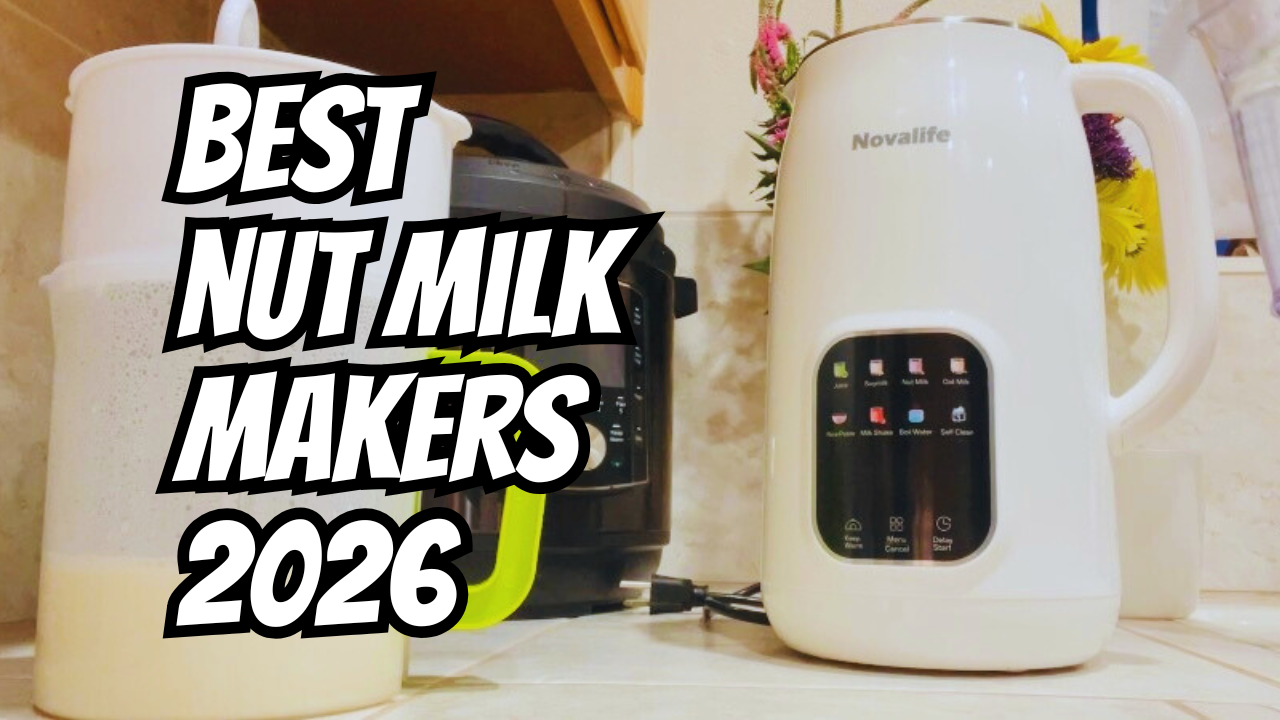
I use the NovaLife 8 in 1 Nut Milk Maker Machine, 40oz Automatic Soy Milk Maker Blender which I purchased on Amazon.
Nut milk maker vs blender
In this video I explain the difference between a nut milk maker machine and a blender, and share my thoughts on which one is worth purchasing to make nut milks, soy milk and juices.
Almond Cow — No-Blade Nut Milk Maker
The Almond Cow is a blade-free system that separates liquid from solids using a spinning impeller and a stainless steel filter basket.
Almond Cow nut milk maker at Amazon.How it works:
It spins ingredients with water and pushes liquid through a filter while separating pulp.
Key features:
- No blades
- One-button operation
- Built-in separation system
- Easy cleanup
Pros:
- Very simple to use
- Consistent results
- Minimal mess
Cons:
- Less creamy than blending systems
- Works best with soaked ingredients
Best for:
People who want a simple, low-maintenance machine with minimal cleanup.
Here’s how I make almond milk in my nut milk milk >
Nama M1 — High-Speed Blade System
The Nama M1 uses a high-speed blending blade system to fully emulsify ingredients before filtering.
Nama M1 Milk Maker on Amazon.How it works:
Ingredients are blended into a smooth liquid first, then filtered into finished milk.
Key features:
- High-powered blending system
- Fully emulsifies ingredients
- Produces very smooth milk
Pros:
- Very creamy texture
- Good for coffee and lattes
- Close to café-style plant milk
Cons:
- Higher cost
- More parts to clean
Best for:
People who want the highest-quality, barista-style plant milk.
Learn more about Nama M1 Nut Milk Maker >
Is a nut milk maker machine worth buying?
ChefWave Milkmade — Automated Internal Blade System
ChefWave Milkmade combines blending, heating, and filtering into one automated process using an internal blade system.
ChefWave Milkmade Non-Dairy Milk Maker at Amazon.How it works:
It blends ingredients inside the machine while heating and then strains the final milk.
Key features:
- Automatic programs for different milks
- Built-in heating system
- One-touch operation
Pros:
- Very convenient
- Consistent results
- Multiple preset options
Cons:
- Not as creamy as premium blending systems
- Less control over texture
- VERY small quantities – 10oz and 20oz
Best for:
People who want an all-in-one, automated machine.
Learn more about ChefWave Milkmade Non-Dairy Milk Maker >
Soyabella — Grinding and Heating System
Soyabella does not use traditional blades. Instead, it uses a grinding and heating chamber to process soybeans.
Soybella at Amazon.How it works:
Soybeans are ground and cooked simultaneously to produce fresh soy milk.
Key features:
- Designed for soy milk
- Fast heating cycle
- Simple operation
Pros:
- Great for hot soy milk
- Quick preparation
- Affordable
Cons:
- Less smooth texture
- May require straining
Best for:
People who primarily make hot soy milk.
How I make soy milk at home in 33 minutes with my soy milk maker machine >
Budget Amazon Nut Milk Makers — Multi-Blade Systems
Many budget models use stainless steel multi-blade systems, often ranging from 8 to over 20 blades.
I use the Novalife Nut Milk Maker. This has been a great machine!
I like that it blends the nut milk for 8 minutes, instead of just 60 seconds like other machines. I’ve found this makes a very creamy texture. The NovaLife nut milk maker has the highest number of blades, it has 20 blades. I think this makes a difference!
How I Use the Novalife Nut Milk Maker
I make soy milk (see videos below), almond milk, oat milk, walnut milk, hemp milk, flax milk, juices, and smoothies in this blender. It has basically replaced my Vitamix blender!
The best part is the Novalife is very inexpensive.
Novalife Nut Milk Maker on Amazon.How it works:
High-speed blades break down ingredients into fine particles, often combined with heating and automatic filtering.
Key features:
- Multi-blade systems
- Fast processing
- Lower cost
Pros:
- Affordable
- Easy for beginners
- Quick results
Cons:
- Inconsistent texture
- Less durable
- Can produce foam or sediment
Best for:
Beginners or budget-focused users.
Learn more about the Novalife nut milk maker >
EASIEST Way to Strain Nut Milks
I use this device to strain nut milk VERY easily (see videos below for a demonstration) >
Comparison Overview
| Machine | System Type | Strength | Best For |
|---|---|---|---|
| Almond Cow | No blades | Simplicity | Easy cleanup |
| Nama M1 | High-speed blade | Creaminess | Barista-style milk |
| ChefWave Milkmade | Internal blade | Automation | Convenience |
| Soyabella | Grinding system | Hot soy milk | Soy-focused use |
| Budget Amazon models | Multi-blade | Affordability | Entry-level users |
Which Nut Milk Maker Should You Choose
Choose based on your priority:
- Almond Cow: Best for simplicity and easy cleanup
- Nama M1: Best for creamy, café-style milk
- ChefWave Milkmade: Best for automation
- Soyabella: Best for hot soy milk
- Budget Amazon models: Best for low cost entry
These makers can also make juice!
Frequently Asked Questions
What is the best nut milk maker overall?
The Nama M1 is generally considered the highest quality for texture, while the Almond Cow is the simplest to use.
Do nut milk makers all use blades?
No. Some systems use no blades at all, while others use blending or grinding systems.
Which machine makes the creamiest milk?
High-speed blending systems like the Nama M1 typically produce the creamiest results.
Are homemade plant milks better than store-bought?
Homemade milk allows control over ingredients and freshness, while store-bought is often more stable and consistent.
Final Takeaway
Nut milk makers differ mainly by how they process ingredients rather than brand or price. No-blade systems prioritize simplicity, blade systems prioritize creaminess, multi-blade systems focus on affordability, and grinding systems specialize in hot soy milk.
Choosing the right machine depends on whether you value convenience, texture, automation, or cost.
Save this post to Pinterest: